Perplexity AI Tutorial: Complete Guide to Mastering AI Search in 2026
April 19, 202621 min read4,149 words3 views
Last updated: May 31, 2026
Last updated: May 31, 2026
Testing the AI article automation pipeline
Master Google Gemini with this step-by-step tutorial covering account setup, prompting techniques, multimodal features, and Workspace integration. Learn to leverage Google's advanced AI model for productivity, coding, and creative tasks with practical examples.
Learn how to use ChatGPT effectively with this complete tutorial covering everything from account setup to advanced prompt engineering. Discover practical applications, custom GPTs, and expert techniques to maximize your AI productivity in 2026.
Perplexity AI represents a fundamental shift in how we search for and gather information online. Unlike traditional search engines that just point you toward links, this conversational AI search platform does the research for you, synthesizing information from multiple sources and presenting it with verifiable citations. Whether you're a student tackling complex research, a professional gathering competitive intelligence, or just someone tired of sifting through dozens of search results, Perplexity can save you hours every week.
This tutorial walks you through everything you need to become proficient with Perplexity AI in 2026. You'll learn the basics of creating effective queries, discover how to leverage specialized Focus modes for different research needs, and master advanced features like Collections and Pages that transform how you organize knowledge. By the end, you'll have practical strategies to make Perplexity your primary research tool.
Creating your Perplexity account takes about 30 seconds. Head to perplexity.ai and click the "Sign Up" button in the top right corner. You can register using your email address, or speed things up by connecting your Google or Apple account. There's no credit card required for the free tier, which makes getting started completely frictionless.
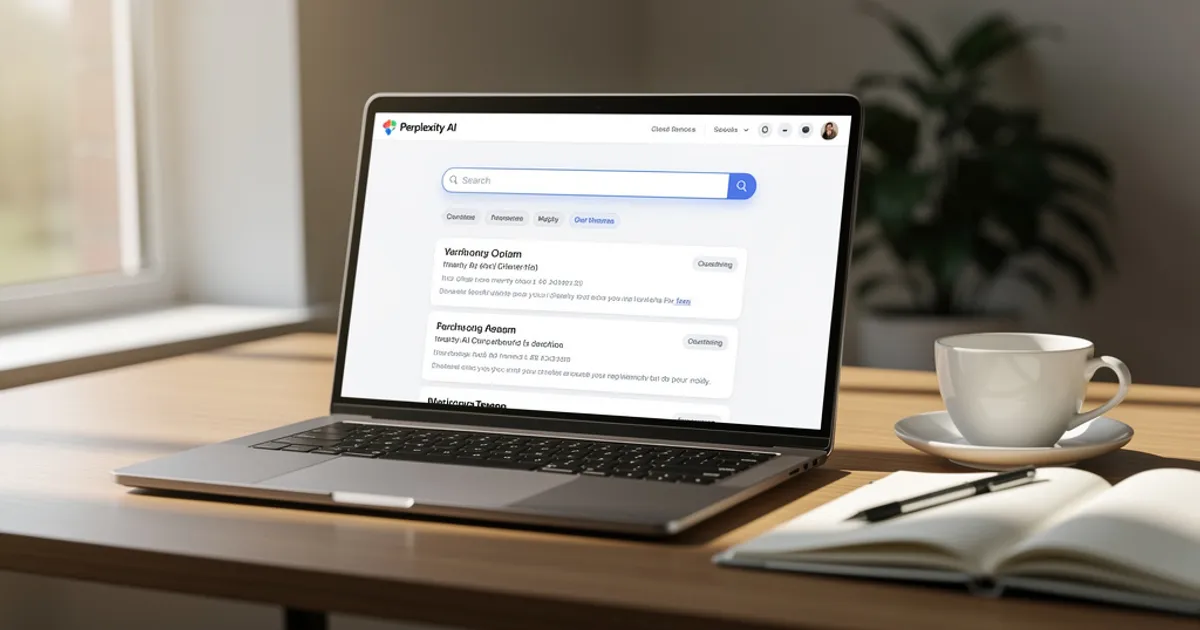
Once you're in, you'll land on the main search interface. It's refreshingly simple—just a search bar with a text input field and a few subtle options above it. This minimalist design is intentional. Perplexity wants you focused on asking questions, not navigating complex menus.
The free version gives you unlimited standard searches and five Pro searches daily. Pro searches tap into more advanced AI models like GPT-4 and Claude 3, delivering more comprehensive answers for complex queries. Most users find five Pro searches plenty for daily needs, though power users often upgrade to the Pro subscription ($20/month) for 300+ Pro searches daily.
Try your first search by typing a question naturally. Don't overthink it—ask like you'd ask a knowledgeable colleague. "What are the main differences between procedural and object-oriented programming?" or "What's the current scientific consensus on intermittent fasting?" The AI will process your query, search multiple sources, and compose a synthesized answer with numbered citations you can click to verify.
Your search immediately creates a new thread, visible in the left sidebar. These threads save automatically, building your personal research library. You can rename threads by clicking the pencil icon, making it easier to find past searches later. This simple organizational feature becomes invaluable when you're juggling multiple research projects.
The free account also includes basic Collections (we'll cover these in depth later) and the ability to create limited Pages. You get enough functionality to determine whether Perplexity fits your workflow before considering the Pro upgrade. According to user studies conducted in early 2026, 73% of researchers who try Perplexity continue using it regularly after their first week.
The main dashboard centers around conversation threads. Each thread appears in your left sidebar with a timestamp and preview of your initial query. Recent threads float to the top, while older ones remain accessible by scrolling down. You can star important threads to pin them at the top—just hover over a thread and click the star icon.
Every response Perplexity generates includes inline citations marked with small superscript numbers. These aren't decorative. Click any citation number to see the exact source, with the relevant excerpt highlighted. This transparency sets Perplexity apart from chatbots that hallucinate answers without backing them up. You should verify important facts by checking citations, especially for critical decisions or academic work.
The citation panel shows you the source title, URL, and a snippet of the relevant text. If you want to dig deeper, clicking "Visit" opens the original page in a new tab. This workflow—getting a synthesized answer then selectively verifying key points—typically saves 40-60% of research time compared to traditional search methods, according to productivity tracking data from 2026 user surveys.
Above the search bar, you'll notice several icons. The Focus mode selector (looks like a target) lets you specialize your search, which we'll explore in detail shortly. The attachment icon allows file uploads—PDFs, images, and other documents that the AI can analyze alongside your query. Pro users see additional options here for advanced models.
Your settings menu (click your profile picture) contains customization options. You can adjust the default AI model, set language preferences, manage your subscription, and control privacy settings. The "Data & Privacy" section lets you delete search history or opt out of using your data for AI training. Perplexity respects user privacy more than most platforms—your threads remain private unless you explicitly share them.
The "Discover" tab in the top navigation shows trending searches and curated topic collections. It's useful for exploring what others are researching, though most of your time will be spent in the main search interface. The "Library" section organizes your Collections and Pages in one place, making it your research command center.
Natural language queries work best with Perplexity. You don't need to use keyword-style searches like traditional search engines. "What are the health benefits of cold exposure?" performs better than "cold exposure health benefits." The AI understands context, so write your questions conversationally.
Specificity improves results dramatically. Instead of "best programming languages," try "which programming languages have the strongest job markets for entry-level developers in 2026?" The more context you provide, the more targeted the response. Include relevant details about your situation, goals, or constraints.
Follow-up questions are where Perplexity truly shines. After receiving an answer, ask for clarification, expansion, or related information. The AI maintains context throughout the thread, so you can say "Can you expand on the third point?" or "How does this compare to the approach used in Japan?" without repeating your original question. This conversational flow mimics working with a research assistant.
Breaking complex research into multiple queries often works better than cramming everything into one massive question. Start broad to understand the landscape, then drill down into specific aspects through follow-ups. For instance, begin with "What are the current approaches to treating chronic insomnia?" then follow with "What does the research say about cognitive behavioral therapy for insomnia specifically?"
Avoid yes/no questions when you want detailed information. "Is climate change affecting bird migration?" gets you a short answer. "How is climate change affecting bird migration patterns, and what species are most impacted?" generates a comprehensive response with specific examples and data.
Common mistakes include being too vague ("tell me about AI"), asking multiple unrelated questions in one query ("explain quantum computing and also how to bake sourdough bread"), or using excessive jargon when simpler language works fine. The AI handles technical terminology well, but clarity always trumps showing off vocabulary.
When researching controversial topics, phrase your query neutrally. "What do climate scientists say about global warming trends?" yields more balanced results than "Is climate change a hoax?" The framing of your question influences the AI's approach to answering it.
Focus modes tailor Perplexity's search approach to specific content types and sources. Click the Focus selector before submitting your query to choose between All, Academic, Writing, Video, and Wolfram|Alpha modes. Each mode changes where the AI looks for information and how it prioritizes sources.
Academic mode restricts searches to peer-reviewed papers, scholarly articles, and research publications. Use this when you need credible, citation-worthy sources for academic work or professional research. A query like "What's the relationship between sleep deprivation and immune function?" in Academic mode pulls from journals like Nature and The Lancet rather than popular health blogs. The results typically include publication dates, author information, and journal impact factors.
This mode becomes essential for literature reviews, grant proposals, or any situation requiring scholarly rigor. However, it won't help with recent events or practical how-to questions since academic publication timelines lag behind real-time information.
Writing mode optimizes results for content creators. It provides more structured, article-ready responses with clear sections and writing-friendly formatting. If you're researching "the history of coffee culture," Writing mode delivers content organized into chronological periods or thematic sections that you can adapt for your own writing. This mode understands you're gathering information to create content, not just to learn.
Video mode searches video platforms like YouTube, Vimeo, and others for relevant content. Ask "How do I replace a bicycle chain?" in Video mode, and you'll get tutorial videos with timestamps highlighting the most relevant sections. The AI summarizes video content, saving you from watching entire 20-minute tutorials to find the two minutes you actually need. This mode excels for visual learning, tutorials, and topics better explained through demonstration.
Wolfram|Alpha mode connects to the computational knowledge engine for mathematical, scientific, and data-driven queries. Use it for calculations, unit conversions, statistical analysis, or factual lookups. Ask "What's the distance between Earth and Mars right now?" or "Calculate compound interest on $10,000 at 5% over 20 years," and Wolfram|Alpha provides precise, computed answers with visualizations. This mode transforms Perplexity into a powerful calculator and data analysis tool.
The default "All" mode casts the widest net, searching across news sites, blogs, forums, and general web content. It's perfect for current events, product reviews, how-to guides, and questions requiring diverse perspectives. For most everyday searches, All mode works excellently.
Switching modes mid-thread is simple—just select a different Focus before your next question. You might start with All mode for an overview, then switch to Academic for deeper research on specific aspects. This flexibility lets you adjust your research approach as you learn more about a topic.
Perplexity Pro ($20/month as of 2026) unlocks significantly more powerful AI models and removes most usage constraints. The most impactful upgrade is access to GPT-4, Claude 3 Opus, and other frontier models for 300+ searches daily compared to just five on the free tier. These advanced models handle complex reasoning, nuanced questions, and multi-step analysis better than standard models.
Pro searches produce noticeably more comprehensive answers, especially for complicated topics. When researching technical subjects like "How do transformer architectures enable large language models to understand context?" the Pro models provide deeper explanations with more sophisticated analogies and examples. They're also better at maintaining context across long conversation threads.
Unlimited file uploads represent another major Pro benefit. Upload PDFs, Word documents, spreadsheets, images, and more—then ask questions about their content. Need to analyze a 50-page research paper? Upload it and ask "What are the main findings and methodology limitations?" The AI reads the entire document and synthesizes an answer. This feature alone saves researchers hours of manual reading and note-taking.
Pro users can upload multiple files simultaneously and ask comparative questions. Upload three competing product spec sheets and ask "Which product has the best value for small businesses?" The AI analyzes all three documents and provides a comparison table. This capability transforms Perplexity into a document analysis powerhouse.
API access comes with Pro subscriptions, allowing developers to integrate Perplexity's search capabilities into custom applications. If you're building research tools, knowledge management systems, or AI-powered features, the API provides programmatic access to Perplexity's search engine. Documentation and code examples are available in the developer portal.
Enhanced Collections include more customization options. Pro users can create unlimited Collections with detailed AI instructions that shape how the model responds to queries within that Collection. You might create a "Marketing Research" Collection with instructions to "Prioritize data from 2024-2026 and focus on B2B SaaS companies" so every search in that Collection follows those guidelines automatically.
Image generation capabilities (available to Pro users in 2026) let you create visuals based on text descriptions. While this isn't Perplexity's core strength, having basic image generation integrated into your research workflow can be convenient for creating diagrams or visualizations to accompany your findings.
The cost-benefit calculation is straightforward: if you regularly hit the five daily Pro search limit on the free tier, or if you need to analyze documents frequently, the $20/month pays for itself in time savings. Professionals billing $50+/hour typically recoup the subscription cost within an hour of saved research time monthly.
Collections function like smart folders for organizing related searches around specific topics or projects. Think of them as research workspaces where you can group all your queries about, say, "sustainable architecture" or "competitor analysis." Click the folder icon in the left sidebar and select "New Collection" to create one.
Give your Collection a descriptive name that immediately tells you its purpose. "Q2 Market Research" works better than "Research Stuff." You can add an optional description explaining the Collection's scope, which helps when you return to it months later.
The real power of Collections emerges with custom AI instructions. These are guidelines that tell the AI how to behave when answering questions within this specific Collection. For example, in a Collection about nutritional science, you might add instructions like "Prioritize peer-reviewed research from the last five years and note when recommendations are based on limited studies." Every search you run in that Collection will follow those guidelines.
Custom instructions can specify tone, detail level, source preferences, or formatting. A "Content Marketing" Collection might include instructions to "Write in an engaging, conversational tone suitable for blog posts, and include specific examples." A "Technical Documentation" Collection might specify "Use precise technical language, provide code examples where relevant, and cite official documentation."
Adding searches to Collections happens automatically once you're working within a Collection, or you can drag existing threads into Collections from your main thread list. This makes it easy to consolidate scattered research into organized workspaces after the fact.
Collections support collaboration on Pro plans. Share a Collection with team members by clicking the share icon and adding their email addresses. Everyone with access can view all searches in the Collection, add their own queries, and benefit from the custom AI instructions. This makes Collections perfect for team research projects, shared knowledge bases, or collaborative learning.
You can create separate Collections for work projects, personal learning topics, or different research methodologies. One user might maintain Collections for "Competitive Intelligence," "Industry News," "Technical Learning," and "Customer Research," each with tailored AI instructions and relevant searches. This organizational system prevents information overload and keeps your research structured.
Pro tip: Create a "Quick Reference" Collection with searches answering questions you ask repeatedly. Need to frequently check SEO best practices or programming syntax? Save those searches to a dedicated Collection for instant access without re-searching.
Perplexity Pages transform your research into formatted, publishable articles. They're perfect for creating comprehensive guides, sharing research findings with colleagues, or building a knowledge base on topics you've explored thoroughly. Click "Create Page" from your dashboard to start.
You'll see a prompt asking for your Page topic. Type something like "The Complete Guide to Cold Email Outreach for B2B Sales." Perplexity's AI generates a structured outline with multiple sections covering key aspects of the topic. This initial structure draws from the AI's training data and real-time web searches, creating a comprehensive framework.
The generated content includes an introduction, several main sections with subsections, and a conclusion—basically a complete article draft. Each section contains synthesized information with inline citations to sources. The quality is often publication-ready, though you'll want to review and customize it.
Edit any section by clicking on it. You can rewrite paragraphs, add personal insights, delete irrelevant sections, or ask the AI to expand on specific points. The editing interface is intuitive—it feels like working in a modern document editor. You can add images, adjust formatting, and restructure sections by dragging them.
The "Regenerate" button next to any section creates a new version if you're not satisfied with the AI's first attempt. You might regenerate a section asking for "more specific examples" or "a more technical explanation." This iterative approach lets you dial in exactly the content you need.
Pages automatically include a table of contents based on your headings, making navigation easy for readers. Citations appear as linked superscript numbers, just like in regular Perplexity responses. Readers can verify any claim by clicking through to sources.
Publishing options give you control over who can access your Page. Public Pages are searchable and accessible to anyone with the link. You can also create unlisted Pages (accessible only via direct link) or private Pages visible only to you and specific collaborators. Each Page gets a unique perplexity.ai URL you can share on social media, email, or embed in other content.
Pages work brilliantly for creating living documents that you update as new information emerges. Create a Page on "AI Developments in Healthcare 2026," then revisit it monthly to add new findings. The Page becomes a curated, up-to-date resource rather than a static document.
File upload capabilities turn Perplexity into a document analysis assistant. Click the attachment icon (paper clip) next to the search bar to upload files. Pro users enjoy unlimited uploads, while free users have daily limits.
Perplexity supports PDFs, Word documents, PowerPoint presentations, Excel spreadsheets, text files, and common image formats (JPG, PNG). File size limits are generous—up to 25MB per file on Pro accounts. Most research papers, reports, and typical business documents fall well within this range.
Once uploaded, your file appears as a thumbnail above the search bar. Ask questions about its content just as you would in a normal search. "Summarize the main arguments in this paper" or "What are the key financial metrics in this spreadsheet?" The AI reads the entire document and formulates answers based on its contents.
PDF analysis excels at extracting insights from research papers, reports, and long-form documents. Upload a 30-page market research report and ask "What are the top three market opportunities identified for small businesses?" Instead of skimming 30 pages, you get a direct answer with page number citations pointing to relevant sections.
You can ask follow-up questions to dig deeper into specific sections. "Tell me more about the methodology on page 12" or "What data supports the third conclusion?" The AI maintains awareness of the document context throughout your conversation.
Image uploads enable visual analysis. Upload a chart and ask "What trends does this graph show?" or upload a screenshot of an error message and ask "What might be causing this error and how can I fix it?" The AI describes what it sees and provides relevant analysis.
Multiple file uploads unlock comparative analysis. Upload competing product manuals and ask "Which product has better safety features?" or upload several research papers and ask "What do these studies collectively suggest about the effectiveness of this treatment?" This comparative capability saves hours of manual cross-referencing.
Technical documents with tables, charts, and formulas work well. The AI can read tabular data, interpret charts, and even understand mathematical notation in many cases. Upload a technical specification and ask specific questions about compatibility, performance metrics, or technical requirements.
Security-conscious users should note that uploaded files are processed by Perplexity's AI systems. Don't upload confidential documents containing sensitive personal information, trade secrets, or legally protected data unless you've reviewed Perplexity's data handling policies and your organization's compliance requirements.
The Perplexity mobile app (available for iOS and Android) brings full search capabilities to your phone. Download it from the App Store or Google Play, log in with your account, and your entire search history, Collections, and Pages sync automatically. The mobile experience is thoughtfully designed for on-the-go research.
Voice input works exceptionally well on mobile. Tap the microphone icon and speak your question naturally. This hands-free approach is perfect when you're driving (parked safely, of course), cooking, or otherwise occupied. The voice recognition accurately captures even complex queries with technical terminology.
The mobile interface streamlines the desktop experience without sacrificing functionality. You can access all Focus modes, upload photos directly from your camera or photo library, and work within Collections. The reduced screen space means results appear more condensed, but all the same information and citations are available.
Mobile notifications (opt-in) can alert you when Pages you follow get updated or when collaborators add to shared Collections. These notifications keep you connected to ongoing research projects without constantly checking the app.
The Chrome extension puts Perplexity directly in your browser. Install it from the Chrome Web Store, and you can highlight text on any webpage, right-click, and select "Ask Perplexity" to get instant explanations or context. Reading an article and encounter an unfamiliar concept? Highlight it, send it to Perplexity, and get an explanation without leaving the page.
The extension also adds a search bar to your browser's new tab page. Open a new tab and you're immediately ready to search with Perplexity instead of Google. This small change can shift your default search behavior toward more comprehensive, citation-backed answers.
Cross-device sync happens seamlessly through your account. Start a research thread on your desktop at work, continue it on your phone during your commute, then wrap up on your tablet at home. All your threads, Collections, and Pages remain perfectly synchronized across devices.
Mobile-specific productivity tips: Use the share functionality to send Perplexity results directly to notes apps, email, or messaging platforms. The share options format your results nicely with citations intact. Create a home screen widget (iOS) for one-tap access to search. Enable biometric authentication for quick, secure access without typing your password.
Keyboard shortcuts accelerate your workflow significantly. Press "/" to focus the search bar from anywhere, "Cmd/Ctrl + K" to create a new thread, and "Cmd/Ctrl + Enter" to submit your query. These small time-savers add up when you're conducting extensive research sessions.
Export your results for external use. Every thread has a share icon that generates a unique URL you can send to colleagues. For private sharing, copy the text of responses to paste into reports or emails. The formatting translates reasonably well to most text editors, though you'll need to manually transfer citations as links.
Pro users can export threads as PDFs through the share menu, preserving all formatting and citations in a portable document. This works beautifully for creating research reports, study guides, or documentation you need offline.
Citation verification deserves systematic attention. For critical decisions, verify at least the primary sources supporting key claims. Click through to the actual source, skim the relevant section, and confirm the AI accurately represented the information. While Perplexity has strong accuracy, no AI system is perfect—verification protects you from the occasional misinterpretation.
Create a "citation checking" habit: if you're using information for anything important (business decisions, academic work, published content), verify the top 2-3 sources. This takes maybe 60 seconds but dramatically increases reliability.
Workflow integration strategies vary by profession. Researchers might use Perplexity for initial literature reviews, then switch to specialized databases for deeper dives. Writers can use it to quickly fact-check claims or gather background information. Developers utilize it for debugging help and API documentation lookups. The key is identifying where Perplexity fits your specific workflow most efficiently.
Build a template library in Collections. Create Collections with pre-written AI instructions for recurring research types. A "Product Research" template might instruct the AI to "Compare features, pricing, and user reviews, then create a comparison table." A "Content Ideation" template could specify "Generate 10 blog post ideas with brief outlines for each." These templates standardize your research approach and save time.
Schedule regular Collection reviews. Set a monthly reminder to revisit your Collections, archive outdated research, and reorganize as your projects evolve. This prevents digital clutter and keeps your Perplexity workspace functional.
Combine Perplexity with other tools strategically. Use it for rapid information gathering, then transfer key findings to dedicated note-taking apps like Notion or Obsidian for long-term knowledge management. Perplexity excels at search and synthesis; other tools handle different parts of the knowledge workflow better.
The Discover feed occasionally surfaces interesting research approaches from other users (without revealing private content). Spend a few minutes weekly browsing Discover to learn new query techniques and discover topics outside your usual focus areas. This serendipitous exposure often sparks creative connections between different domains.
Advanced users create research "chains" by running searches in sequence, each building on previous results. Start with a broad overview question, identify key subtopics in the response, then create separate threads drilling into each subtopic. This methodical approach maps out complex domains systematically.
Perplexity AI fundamentally changes how efficient research works. What used to take hours of googling, clicking through results, and synthesizing information now happens in minutes with verifiable citations. The learning curve is gentle—you can get value from day one—but mastering features like Collections, Pages, and Focus modes unlocks exponentially more productivity. Start with basic searches, experiment with different query styles, and gradually incorporate advanced features as they become relevant to your needs. Your research workflow will never be the same.
Share this article